Thursday, May 19, 2016

Can the Republican Party Survive the 2016 Election?


As the 2016 general election draws nearer, the division in the Republican party has become more visible. Talk of a brokered convention and a rumored plot to overthrow the Republican's presumptive nominee, Donald Trump, has further revealed that the Republican party is facing a dilemma that could significantly affect the future of the party.

In his extensive article published in The Atlantic, commentator David Frum diagnoses the dilemma in the Republican party as one stemmed from class division. He comments on the failure of politicians such as Mitt Romney who run on the "Conservative Classic"--tax cuts, budget cuts, deregulation, and free trade, calling these people economic conservatives. However, economic conservatives do not make up the primary voting base of the Republican part; social conservatives make up the great majority of voters identifying with the Republican party. Social conservatives are in favor of entitlement programs and identify with "traditional" conservative values. The voting base of the Republican party has begun to feel betrayed by their own party, Frum explains in his article, adding that they feel the party does not have their best interests in mind. Because Donald Trump has focused his campaign on social conservatives, he has won great favor in the eyes of many Republican voters. However, the economic conservatives in Congress do not like his views or appreciate his ridicule, which explains why there have been rumors that the party leaders are trying to find someone else to fulfill the role of being the nominee.

In my opinion, I do not believe that this election will break the Republican party. I do however believe that changes will need to be made to the party's platform in order for the party to survive in the future. My generation particularly seems to be more leaning more liberal, therefore the Republicans may have to come more to the center with their core values in order to win votes. Also, I think that this election will force the Republicans in Congress to reevaluate their appeal to the voter base. The Republicans in Congress seem to be very unpleased with having Trump as their nominee, yet the reason someone like Trump could even be elected the nominee is because Republican party voters feel betrayed by their own party. I believe the Republicans in Congress will need to shift focus from economic issues to social issues in order to reunite their party.


Sources: http://www.theatlantic.com/magazine/archive/2016/01/the-great-republican-revolt/419118/

Monday, May 2, 2016

Judicial Branch Post

Supreme Court Divided On Immigration


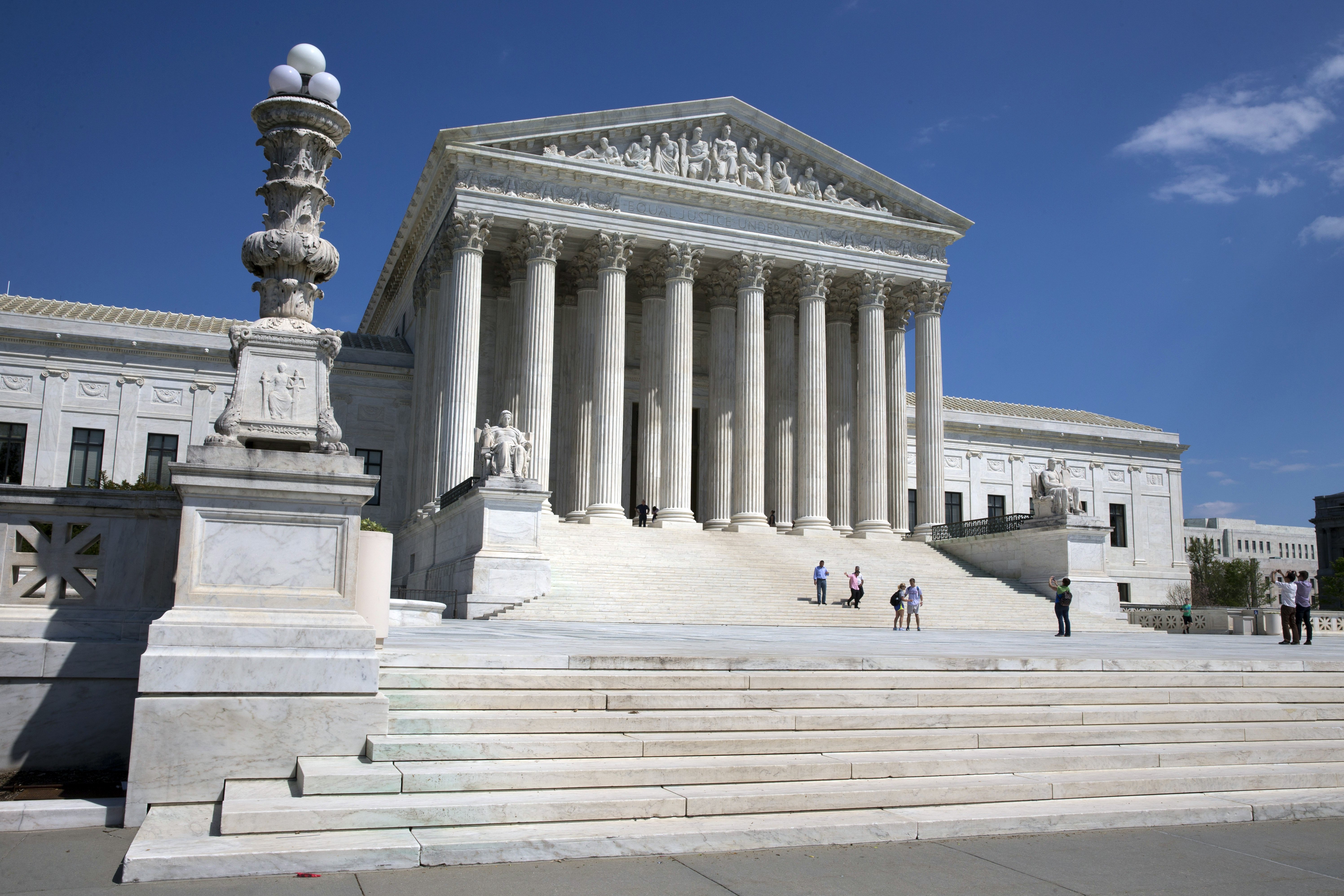
While hearing oral arguments on Monday, April 18th, the Supreme Court suggested an evenly split division along party lines in the case of United States v. Texas. The case calls for judicial review of President Obama's 2014 executive order on immigration. Twenty six states are suing the federal government because of Obama's Deferred Action for Parents of Americans and Lawful Permanent Resident's Program. The executive order allows some immigrants to remain in the country illegally and apply for work permits. The plaintiffs claim that the order imposes upon Congress's power to make laws. The ruling for this case of appellate jurisdiction is  to take place in June, amidst a busy season in politics with the race for the White House heating up. Currently, it appears the decision is 4-4, although this is a mere speculation based on the questions asked by the justices. 

Political commentators are analyzing the situation in different ways. Dahlia Lithwick from Slate examined the case in context to the recent vacancy in the court and how Scalia's death has affected this decision. She suggests that if Scalia was alive, this vote would go to the side of plaintiffs, thereby overturning Obama's executive order. Commentator Amanda Sakuma from MSNBC mentioned that the prominent Republican front runners, Ted Cruz and Donald Trump, both claimed that they would overturn Obama's immigration order if they were elected to office. 

This case is clearly very political and a decision will be reached in a heated time in this unique election. While the Supreme Court can only rule on the constitutionality of a case and must leave the problem solving of the immigration issue to Congress, if the ruling of the court is split 4-4, the lower court's original jurisdiction will stand. This lower court ruled on the side of Texas, therefore an even split in the Supreme Court would result in the deportation of 4 million undocumented immigrants. 

I am not sure where to stand on this case. I speculate that because 26 states are suing the government as a result of this executive order, perhaps this was not a great move on Obama's part. Also, The Supreme Court grants a writ of certiorari to cases that they are interested in hearing, therefore this must be an issue that the majority of the court feels passionate about. However, I believe that there needs to be some other solution to this problem than simply deporting 4 million people. 

Source: http://www.usnews.com/opinion/articles/2016-04-18/the-supreme-court-signals-division-during-hearing-on-immigration-order


Sunday, April 17, 2016

Unit 4- Bureaucratic Post

DEET Seen as Safe for Pregnant Women to Avoid Zika Virus

With the recent outbreak of the harmful Zika virus in Central American and South America, the Environmental Protection Agency along with the Center for Disease Control have been quick to research preventative methods in case the virus could spread to the United States. Zika is spread through infected mosquitoes and can be particularity harmful to pregnant women, as it has been proven to cause birth defects. 

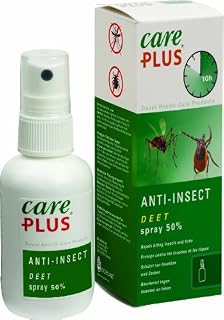
Numerous studies have been completed and appropriations have been devoted to try and determine whether or not the insect repellent, DEET, would have any adverse affect on pregnant women. In 2010, researchers analyzed the blood of 150 pregnant New Jersey woman to check their umbilical cords for a range of pesticides. According to the study's senior author, Mark Robson, DEET was not found at remarkable levels and the babies were born at normal weight, length, and circumference. Numerous other studies done in the past have confirmed that DEET will not harm unborn babies if used by pregnant mothers. However, for pregnant women who are concerned with pesticide levels, doctors recommend using a lower dosage of DEET and applying more often. 

With the virus expecting to spread to the Gulf Coast of the US by the Summer, the EPA has issued a statement that DEET is safe for pregnant women to use as a preventative measure against the Zika virus. In 2014 a safety review by the EPA did not identify, "any risks or concern to human health," with DEET as long as the instructions were followed. 

This article reveals an excellent example of the part bureaucrats play in various aspects of society. Without the EPA and the CDC keeping an eye on the spread of the Zika virus, Americans living near the Gulf would have very little resources in knowing what to do to protect themselves.Without the EPA doing research and releasing statements, the CDC would not know what to recommend for treatment or prevention. The partnership of the EPA and CDC in this potential crisis will undoubtedly save many lives and prevent birth defects among many unborn American children near the Gulf. Without bureaucrats to keep an eye on the spread of the virus, Americans would have no way of knowing what to do to protect themselves. Although bureaucrats tend to get a bad reputation, they are critical to keeping the government up and running, protecting American citizens, and making sure that many aspects of life in America are to the highest standard. 

Source: http://www.nytimes.com/2016/04/05/health/zika-virus-deet-pregant-women-safety.html?rref=collection%2Ftimestopic%2FEnvironmental%20Protection%20Agency&action=click&contentCollection=timestopics&region=stream&module=stream_unit&version=latest&contentPlacement=3&pgtype=collection

Want to know more about the Zika virus? Watch this informative video: http://www.nytimes.com/video/world/americas/100000004185544/understanding-zika-virus.html


Thursday, March 31, 2016

Unit 4 Post

President Obama Vetos Massive Defense Bill

In October of 2015, President Obama completed the fifth veto of his presidency in rejecting the $612 billion National Defense Authorization Act. Although the bill was expected to be vetoed by the president, it was very much a bipartisan effort in both the House and Senate. Sources suggest that the use of this expressed power reveals that Obama has little issue with provoking the Republicans in Congress, especially during the final stretch of his presidency. 

The background of Obama's opposition to this budget goes in to a larger picture of a battle with Republicans in Congress over federal spending. While the Republicans would prefer to only raise the amount poured in to defense spending, Obama is looking to raise spending in other federal agencies besides just the Pentagon alone. Obama told reporters that the bill falls "woefully short" in key areas, yet he praised the legislation for other components, such as the proposed reform of the 401(k) system. 

This veto has not come without backfire, as many Republicans in Congress were furious after their proposal was denied. Former Speaker of the House John Boehner claimed that the rejection of the bill "left troops in the middle," and Senator John McCain claimed that troops expect, "more from their commander-in-chief." The Republicans in Congress were hopeful of an override vote, however, the majority for the override was not met. 

While I agree that defense spending should be a priority, I do not think that the veto of this bill affects the troops as much as the Republicans in Congress are insinuating. I agree with the decision of the POTUS in the aspect that if more funds are poured in to the military, other federal agencies should receive more money too. If defense spending was raised alone, either taxes would increase or funding for other federal agencies would have to be cut. This would cause controversy and complication, and also bring about the assumption that Obama cares more about defense spending than anything else, contradicting his trend of typical policy agenda. I think that the veto, in the bigger picture, did the Republicans in Congress a favor.

Source: http://www.politico.com/story/2015/10/barack-obama-vetoes-defense-bill-215074


Sunday, March 20, 2016

Unit 4 Post

Representative Jim McDermott- Washington’s 7th District
Democrat Jim McDermott represents the suburban area outside of Seattle, Washington. McDermott is 79 years old and was elected to Congress in 1989, serving 14 terms in Congress. Earlier this year he announced that he would not be running for re-election. Representative McDermott went to medical school and attained a medical degree. Later, he served time during the Vietnam War as US Navy Medical Corps as a psychiatrist. In 1974, he ran for state Senate and was re-elected three times. McDermott currently serves on the House Ways and Means Committee and is a member of the Progressive Caucus. His biggest political contributor is the United Food & Commercial Workers Union. The 7th districts includes much of Seattle and its surrounding area, containing part of the city and the suburbs around it, and qualifies as an area fueled by technology because within the district is a modern city.

Bill 1 - ENCRYPT Act: The goal of the ENCRYPT Act is to make it impossible for the government to request companies and service providers to alter security functions in order to surveillance users. This bill has clearly come as a result from the San Bernardino shootings, where suspects of the shootings apparently stored information regarding the terrorist attack on their Apple devices. The FBI asked Apple to essentially crack their own encryption code in order to get this information. Apple did not follow through with this request. This bill is still in committee, therefore Congress has not voted on it yet, but if it does reach the floor, I am speculating that Representative McDermott will vote in favor of the bill. Because his district contains the heart of Seattle, a technological city, I believe that he will vote to protect the privacy of his constituents.


Bill 2 - Aviation Act: This bill would privatize air traffic control and move air traffic control to a private non-profit organization. This bill has already made it out of committee, however it has not been voted on the floor yet. Representatives in support of this bill point out the fact that the current reform plan of the Federal Aviation Administration has taken much longer to execute than originally planned, making the cost of the project $120 billion instead of the projected $40 billion. Because Representative McDermott is on the House Ways and Means Committee that deals with revenue, the cost of the old system and the cost of the new system would definitely be something that his congressional committee would be looking in to. However, Democrats on the Transportation Committee have been claiming that they will be making a competing bill to the Aviation Act that will better match the Democrat's spending priorities. If this bill is created, McDermott will most likely side with his fellow Democratic congressmen.


Bill 3 - Sentencing Act: The goal of this bill is to reform sentencing primarily for people convicted of crimes involving drug possession. The bill would reduce the number of years those convicted of drug possession would be required to serve as well as create a minimum number of years a person convicted with a domestic violence crime would be required to serve. The Sentencing Reform Act was sent out of committee in November of 2015, but has not been passed by the House or Senate yet. Because sources suggest that this bill has a high chance on being passed and was a bipartisan effort, I would guess that Representative McDermott would vote to pass this legislation.

Tuesday, March 1, 2016

Unit 3 Post

Donald Trump Under Fire for Hesitating to Disavow Support from KKK Members

The current Republican front runner, Donald Trump, has been under fire early this week after an interview with CNN where he refused to disavow the support from former Klan leader David Duke. In an interview with CNN correspondent Jake Trapper, Trump claimed that he had no idea who David Duke was or what white supremacy was about. Trump refused to say that he would not accept the support of white supremacists four times, each time offering the question "what is white supremacy?" In response to Trapper's question about whether Trump would like to publicly disavow Duke's endorsement, Trump replied, "I don't know what group you're talking about. You wouldn't want me to condemn a group that I know nothing about. ... If you would send me a list of the groups, I will do research on them and certainly I would disavow them if I thought there was something wrong."

Later in the week, Trump took to twitter to publicly disavow David Duke's support. At a press conference on the same day Trump was endorsed by ex-candidate Chris Christie, he retweeted a video of him being asked about David Duke and disavowing his support.

While Trump made a huge mistake in refusing to deny the endorsement of David Duke during the interview, this story is a prime example of horse-race journalism. Instead of asking Trump about his plans for policies, the CNN correspondent was more interested in shining a light on what kind of people have been showing support for Trump recently, perhaps in an attempt to make him look bad to the public. This story also reveals the impact of mass media and broadcast media on society. Television acts as a public medium for politics, especially in an election year, and when a candidate leading an election makes a mistake, it can be expected that the mistake will be talked about on all major news networks. Social media also plays a large role in this story because in the past, candidates would have to publicly make a formal statement to disavow support, but now candidates are free to make this announcement through a social media platform such as Twitter. However, Trump's hesitation and act of confusion about white supremacy and David Duke may cause him to lose support in the polls. After Super Tuesday, we shall see if Trump's twitter announcement was enough to appease his supporters.

Source: http://www.npr.org/sections/thetwo-way/2016/02/28/468455028/trump-wont-condemn-kkk-says-he-knows-nothing-about-white-supremacists


Monday, February 22, 2016

Knowledge About Supreme Court Vacancies May Affect Polling Results

The death of Supreme Court Justice Antonin Scalia came as quite a shock to the public this week, and has raised many questions about what happens next now that there is a vacancy. The death of Scalia, the notorious supporter of conservatism, has raised many opinions about who should choose the next justice, whether a justice should be chosen now, or whether it would be best to wait until after the 2016 election.


In a report by the New York Times earlier this week, the poll results of a poll taken by Morning Consult showed that forty-six percent of registered voters said the next justice should be nominated by the president this year, while thirty-nine percent said the winner of the 2016 election should be the one to put forth a nominee. According to the report, seventy-five percent of the people surveyed said they had heard “some” or “a lot” about the death of Scalia, but it was impossible to tell how much the individuals surveyed knew about Supreme Court vacancies.
It makes sense as to why people wouldn’t know very much about the process of vacancies, seeing as the last time a vacancy occurred during an election year was almost 50 years ago, during the last term of Lyndo
n B. Johnson. Having that in mind, the New York Times asking Morning Consult to add a few questions to the survey about Supreme Court vacancies to reveal how much those being surveyed knew about the process. For examples, individuals surveyed would be asked about the average number of days from the time of nomination to vote for a successor (25), the longest number of days for a nominee’s confirmation (125), and the number of days Obama has left in office (340).


The results showed that respondents were more likely to say the justice should be nominated this year when given more historical context. However, the results also changed when the question of when the next judge should be selected was phrased in different ways. When asked who should do the nominating instead of when the nominating should take place, the number of respondents saying that the winner of the 2016 election should make the decision rose to 44 percent from 39 percent. This reveals that President Obama also plays a key role in the opinions of registered voters concerning this issue. During his presidency, Obama has taken a lot of heat for his policies. Some politicians and spectators believe that the policies are getting criticism by Americans simply because Obama is the one initiating them. In my opinion, this is another example of people not wanting something simply because Obama has the power to choose the course of action. Also, Justice Scalia was a strong conservative, and often conservatives would outrank liberals in court decisions 5-4. Due to his death, the Democrats have a chance to nominate a liberal justice, therefore turning the tables on issues in the Supreme Court. In this time of conflictual political culture, the Republicans in Congress, already feeling not politically tolerant of Obama, will no doubt do all they can to try and prevent Obama’s nominee from reaching the Supreme Court.